Set up Environment
Before converting an avatar, install VRCQuestTools in your project and prepare Unity for Mobile. The project is not the only thing which needs preparation. Unless a Unity module called Android Build Support is installed, you can't even switch the platform to upload for Android.
Prerequisites
This documentation assumes a project which can already upload the avatar for PC.
Install VRCQuestTools
VRCQuestTools is distributed as a VPM repository. Add the repository to VRChat Creator Companion (VCC) or ALCOM to install the package.
-
Press the following button to add the repository to VCC or ALCOM.
Add to VCC/ALCOM -
Add "VRCQuestTools" to your project in the package management screen.
To add the repository manually, use the following URL.
https://kurotu.github.io/vpm-repos/vpm.json
After the installation, "Tools" → "VRCQuestTools" appears in the Unity menu bar.
Hearing "conversion", you may wonder whether your carefully set up avatar gets rewritten. The conversion does not rewrite the original avatar. It duplicates the avatar and its assets, and converts the copies. When the project has the Non-Destructive Modular Framework (NDMF) package, avatars are automatically converted on upload without even creating copies. It also works together with other non-destructive tools such as Modular Avatar. To install NDMF, add the repository with the "Download" button at the top of the Modular Avatar website. If you use Modular Avatar, NDMF is already included in your project.
Install Android Build Support
To upload avatars for Android, the Android Build Support module for Unity is required. Without it, you can't switch the platform to Android in the VRChat SDK control panel. Install it from Unity Hub with the following steps.
- Open "Installs" in Unity Hub.
- Select "Add modules" from the gear icon of the Unity version used by your project.
- Check "Android Build Support" and install it.
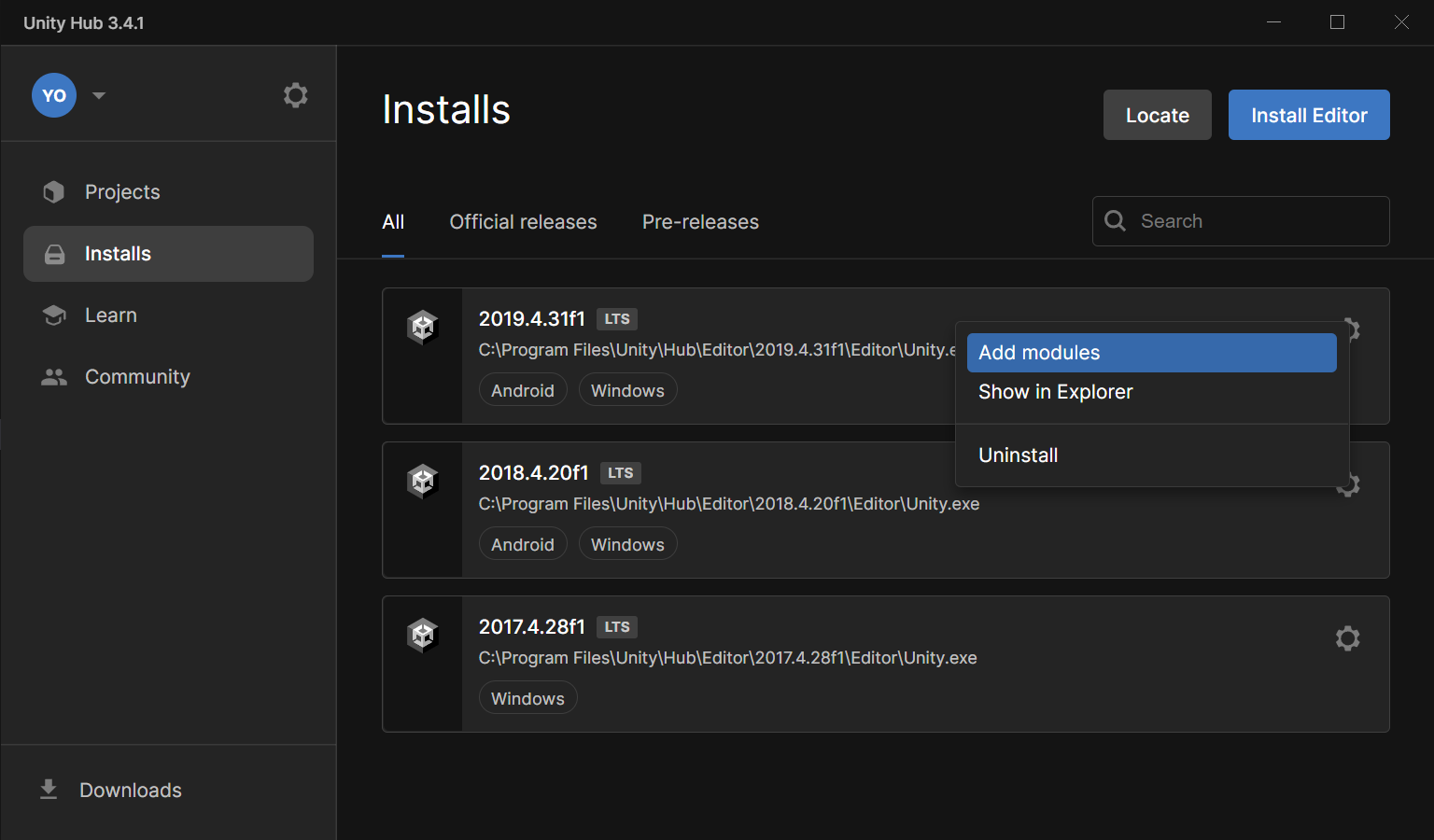
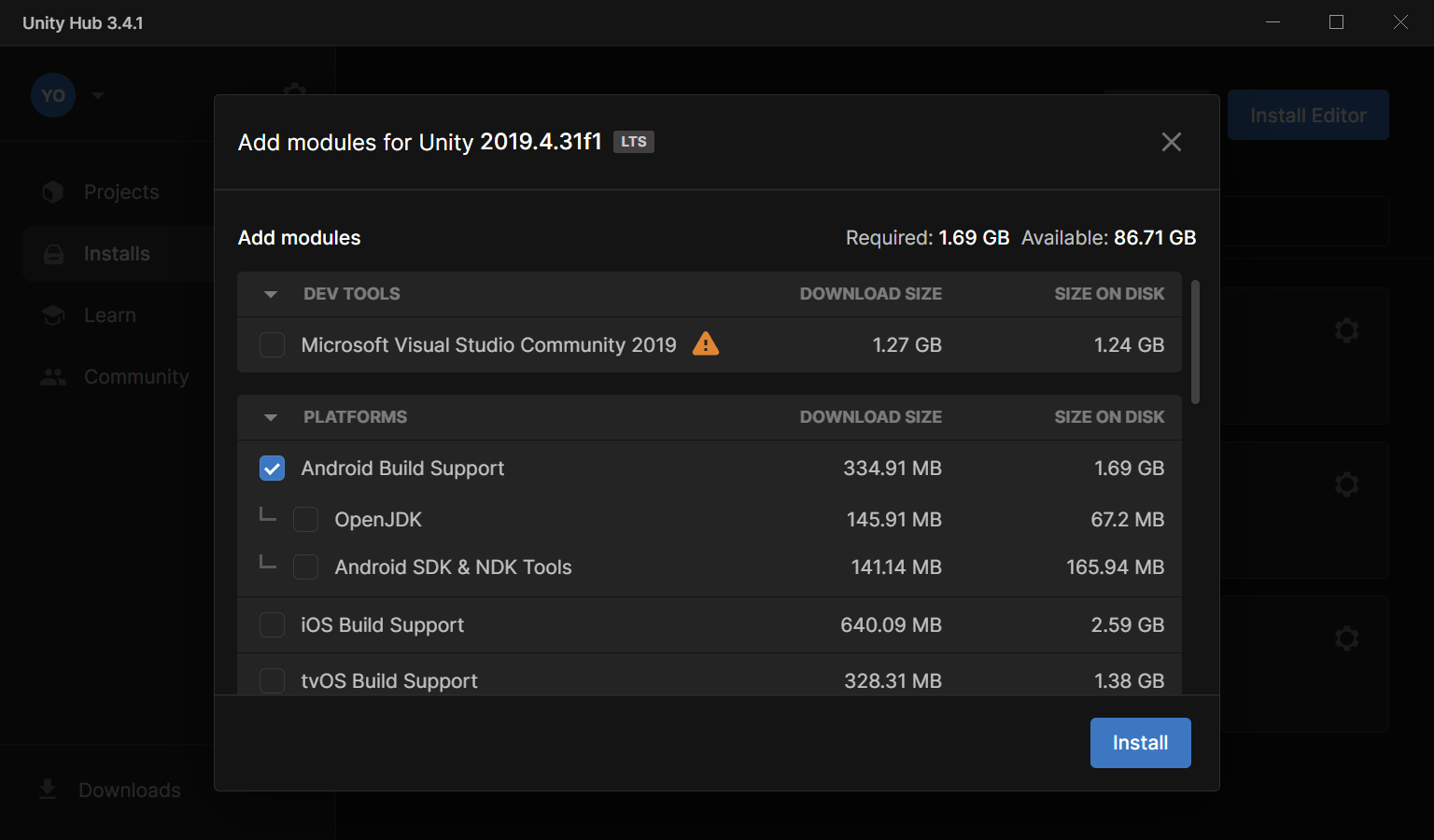
You don't have to check "OpenJDK". "Android SDK & NDK Tools" is usually not required either, but it is required to run a local test (Build & Test) on an Android device.
After restarting Unity, you can switch the platform to Android in the VRChat SDK control panel.
When You Can't Install from Unity Hub
If you can't install the module from Unity Hub, for example when it doesn't appear in the "Add modules" list, use the additional installer from the official Unity site.
- Select the same Unity version as your project (e.g. 2022.3.22f1) in the Unity Download Archive.
- Download "Android Build Support" from "Component installers".
- Run the downloaded installer and follow the instructions.
- Restart Unity Editor if it was running.
You can install iOS Build Support with the same steps (download "iOS Build Support" in step 2).
Install iOS Build Support (Optional)
To upload avatars for the iOS version of VRChat as well, the iOS Build Support module is also required. Install "iOS Build Support" from "Add modules" in Unity Hub, in the same way as Android Build Support.
After installing iOS Build Support, you can switch the platform to iOS in the VRChat SDK control panel.
Apply Recommended Unity Settings
Open "Tools" → "VRCQuestTools" → "Unity Settings for Mobile" from the menu bar to check the recommended settings for working with Mobile. This window also shows whether Android Build Support and iOS Build Support are installed.
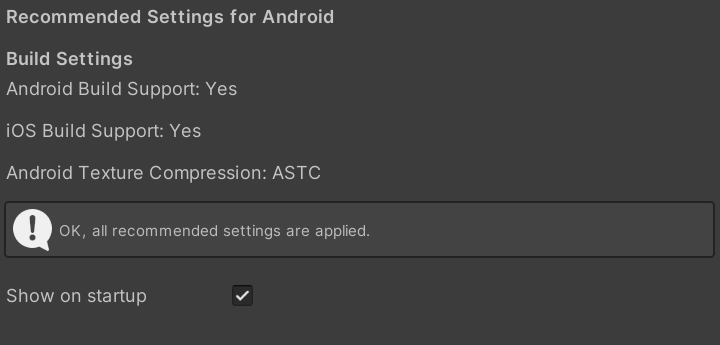
- Android Texture Compression: Using ASTC improves texture quality for Android in exchange for longer compression time.
Press "Apply All Settings" to apply the recommended settings at once.
Next Step
Once your environment is ready, continue to Convert Your Avatar.